
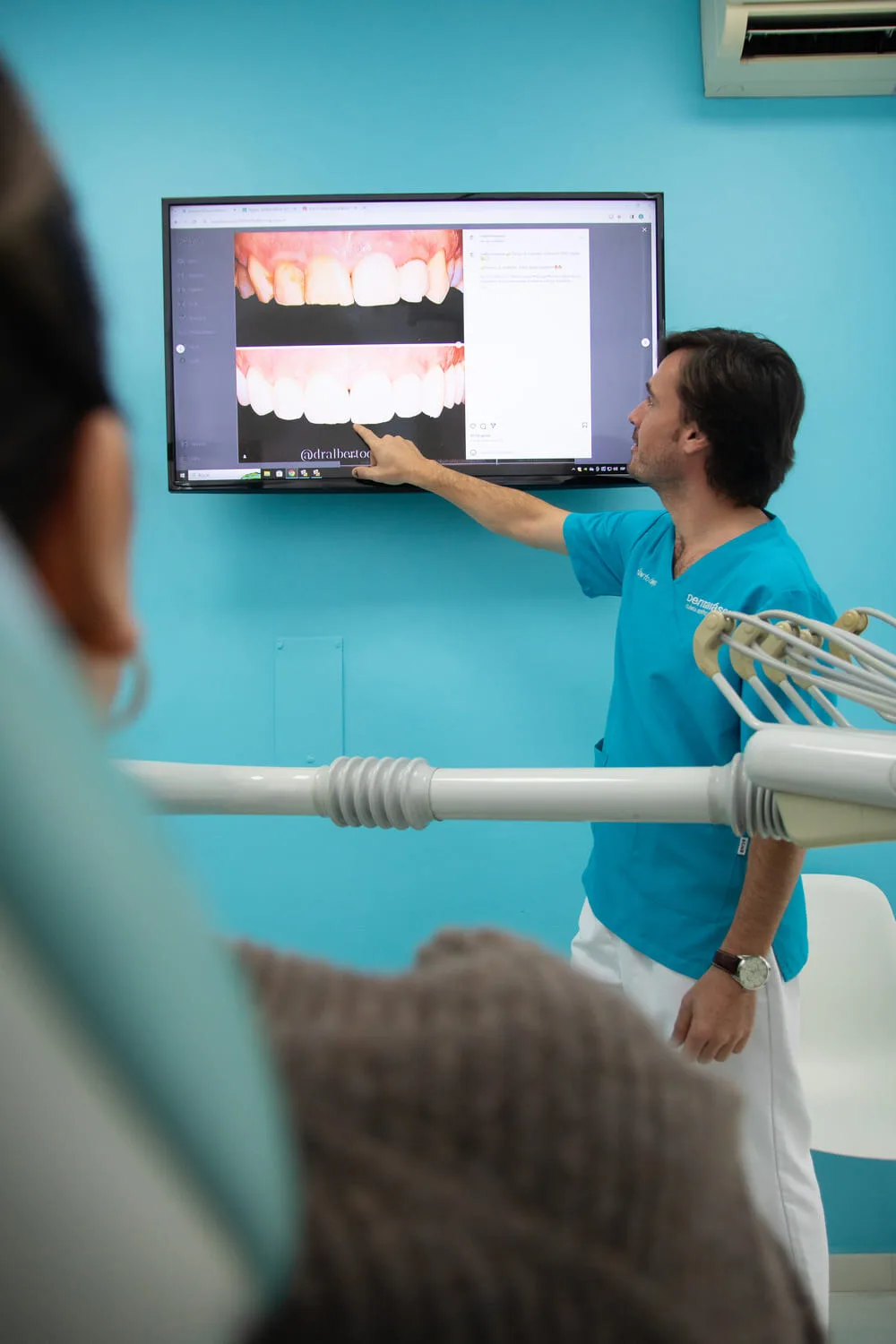
Your tooth can be fixed, without fear, with anaesthetic. Root Canal Treatment in Fuengirola and Maqueda
We clean and seal the nerve. With anaesthetic, it doesn't hurt.
Root canal treatment deals with the inflamed or infected nerve inside the tooth, cleans it and seals it so you can keep the tooth. With local anaesthetic the procedure itself doesn't hurt: the pain you feel now is the reason to treat it, not what you'll feel in the chair.
of each appointment
The tooth has
a nerve. Sometimes
it needs treating.
Inside every tooth there's a soft tissue (the dental pulp) with nerves and blood vessels, housed in one or more canals that run through the root. When deep decay, a crack or a knock reaches that far, the pulp becomes inflamed (pulpitis) or infected. Root canal treatment removes that damaged tissue, cleans and disinfects the inside of the canal and seals it completely, so the tooth can be kept without the nerve that was causing problems.
Does root canal treatment hurt?
The short answer: no.
It's the question we're asked most, and the reason many people avoid treatment out of fear of something that isn't going to happen. With local anaesthetic, the tooth is completely numbed before we begin.
That throbbing pain or the sensitivity that won't go away is the inflamed or infected nerve warning you that something's wrong. It's the symptom that brings most patients to the clinic, and exactly what root canal treatment resolves.
We thoroughly anaesthetise the area before starting. You may notice pressure or vibration from the instruments, but no pain. If at any point you feel more than expected, tell us and we'll top up the anaesthetic straight away.
It's common to feel sensitivity when biting for the first few days, while the inflammation of the tissue around the tooth goes down. It eases with everyday painkillers and improves quickly, according to the NHS.
The signs that show
the nerve is affected.
Not all symptoms are equally obvious. These are the ones that most often mean root canal treatment is needed.
Spontaneous pain
or when chewing
Pain that appears with no obvious cause, that gets worse when biting or pressing on the tooth, or that wakes you up at night, usually means the pulp is irreversibly inflamed. The sooner it's treated, the simpler the process.
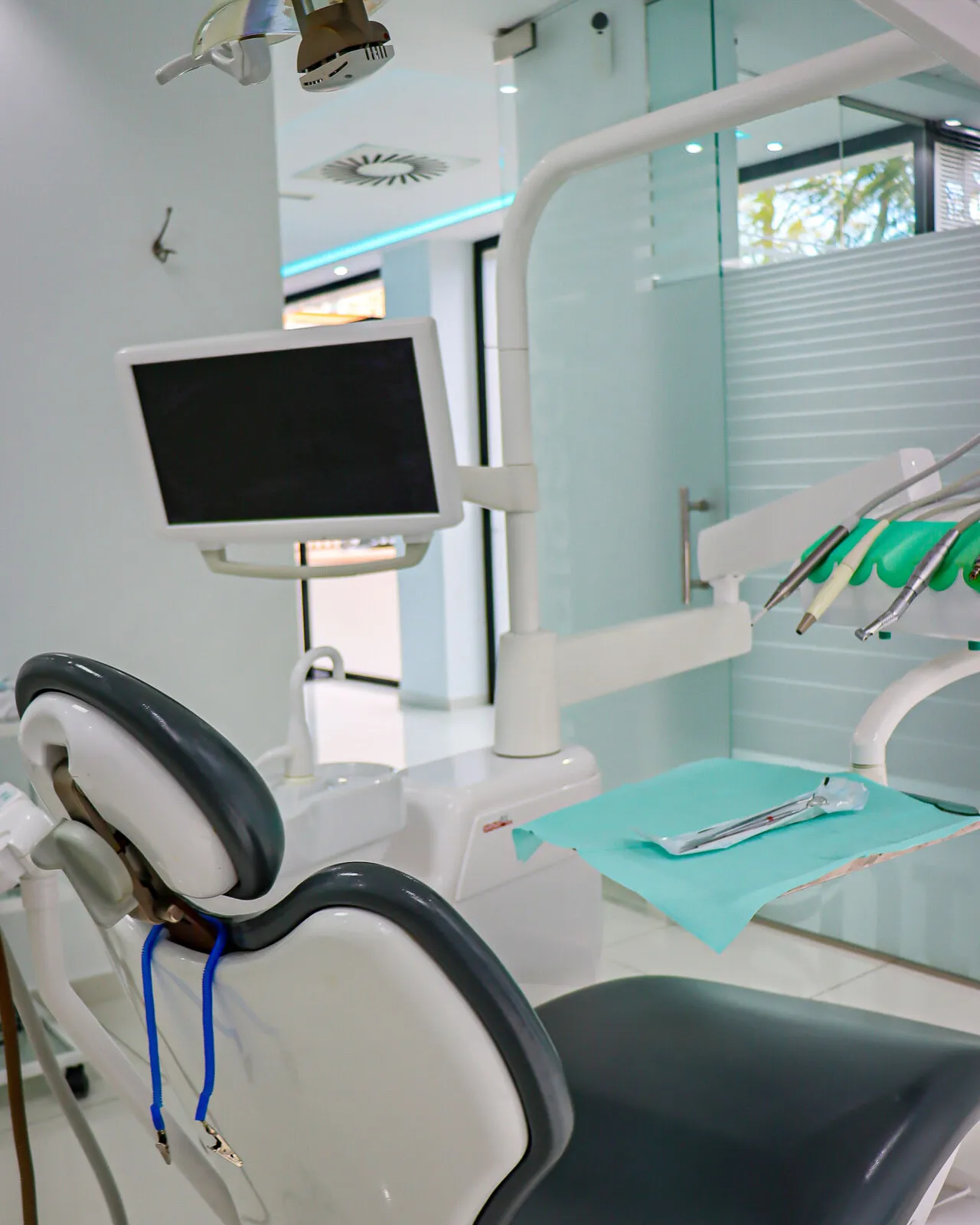
Prolonged sensitivity
A little occasional sensitivity to cold is normal. The warning sign is pain that lasts more than a few seconds after the trigger is removed, or that also appears with heat: both point to a nerve that can no longer recover on its own.
Swelling or a small bump on the gum
A small lump or 'pimple' on the gum next to the tooth (a fistula) is drainage from an infection that has already reached the bone. It's often accompanied by a bad taste in the mouth. It doesn't go away on its own and needs treatment.
The tooth darkens
When the pulp dies, the tooth loses its blood supply and gradually darkens compared with the surrounding teeth, even without any associated pain. It's a clear sign the nerve is no longer alive.
Sometimes, no symptoms at all
The nerve can die without warning. Many root canals are picked up on a routine X-ray, without the patient having noticed anything. That's why regular check-ups matter, even when nothing hurts.
Rotary technology and
an apex locator.
The more precise the diagnosis and cleaning of the canal, the lower the chances of the treatment failing. This is how we do it at Dentaláser.
We locate the exact number of canals and their shape before starting, so none is left untreated.
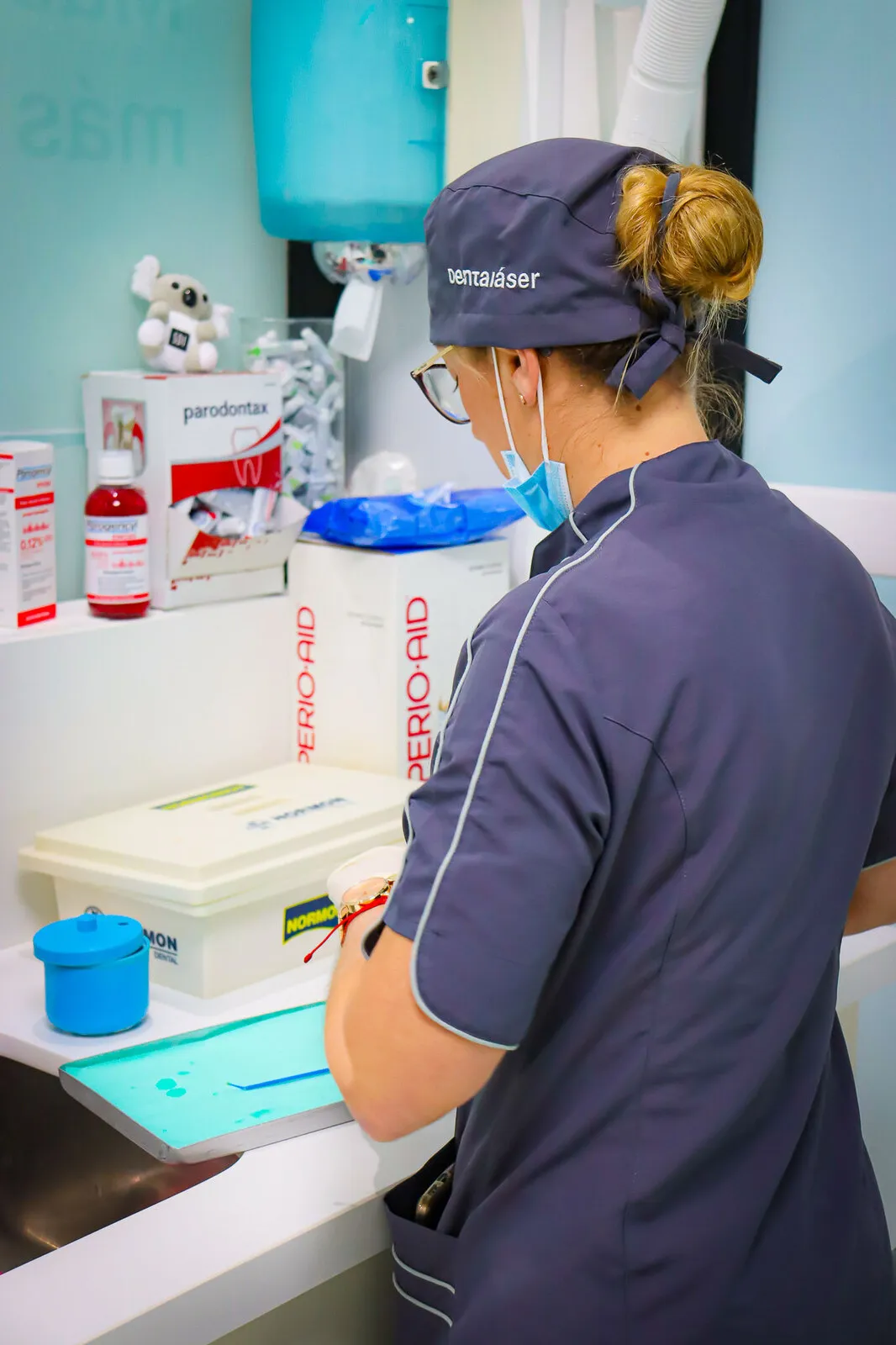
We work with a rubber dam, which isolates the tooth from saliva and stops bacteria getting in during treatment.
Rotary files that clean and shape the canal with greater control and fewer sessions than the manual technique.
It measures the exact length of the canal in real time, so we can seal right to the end without falling short or going too far.
isolation
Five steps, with
anaesthetic from step two.
This is how a complete root canal treatment works at Dentaláser, from start to finish.
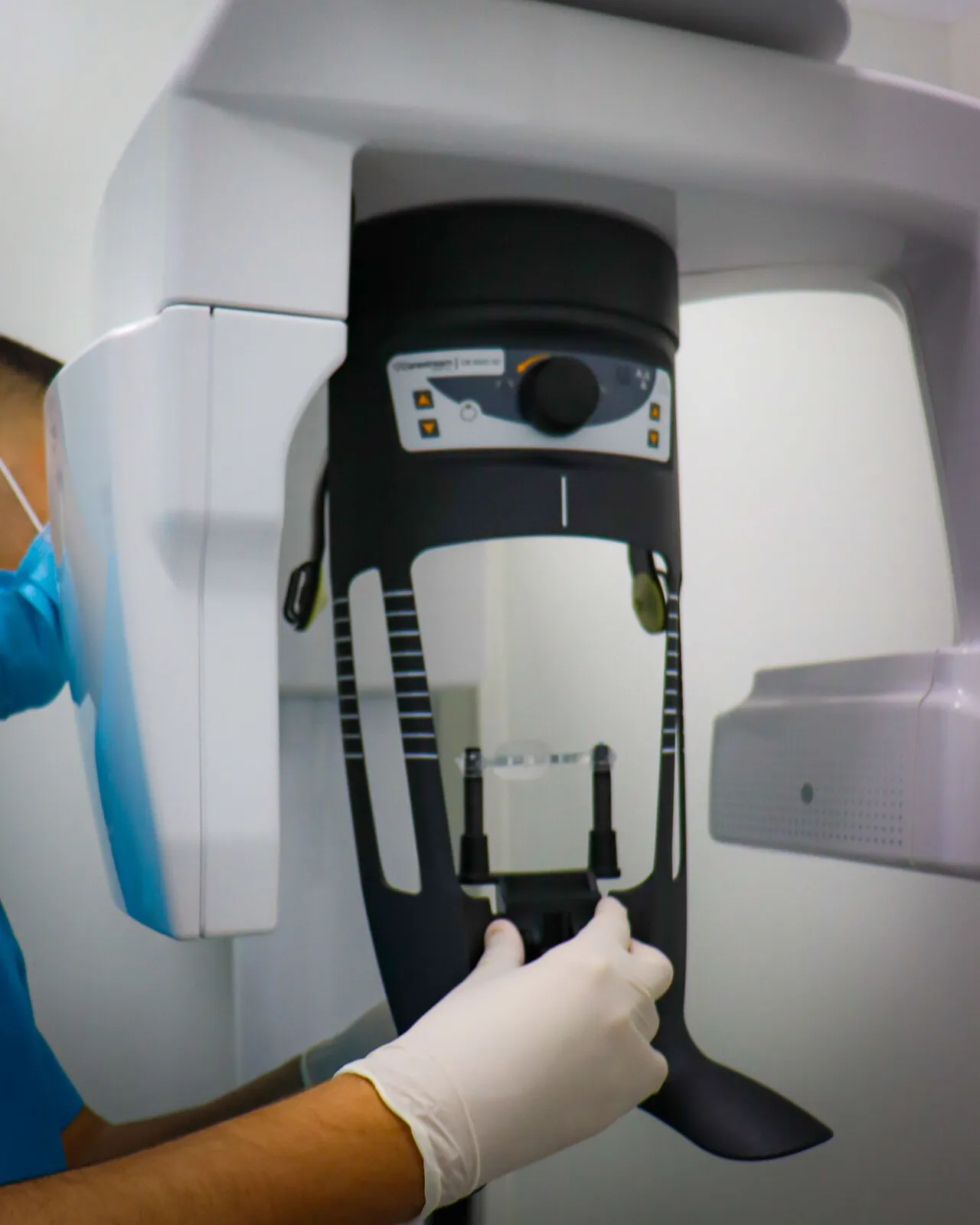
We examine the tooth and assess the state of the nerve, the number of canals and whether there's infection in the bone, using an X-ray or 3D radiology.
We fully anaesthetise the area and place the rubber dam, which isolates the tooth and keeps the working area sterile.
We access the pulp, remove it with rotary instruments and measure the exact length of each canal with the apex locator.
We disinfect the inside of the canal and fill and seal it completely with gutta-percha, to stop it becoming infected again.
We close the tooth with a filling or, if it needs more protection (especially in molars), with a crown that restores its strength and function.
What you can
expect from the treatment.
Sources: NHS: Root canal treatment · Mayo Clinic: Root canal
Risks and alternatives
Root canal treatment or extraction?
Almost always, better to keep the tooth.
Extraction is only considered when the tooth is no longer viable. If the nerve can be treated, keeping the natural tooth is usually the best long-term decision.
| Feature | Root Canal Treatment | Extraction |
|---|---|---|
| Natural tooth | Kept | Lost |
| Replacing the tooth afterwards | Not necessary | Yes, with an implant, bridge or denture |
| Neighbouring teeth | Not affected | May shift if the gap isn't filled |
| When it's considered | Whenever the tooth is viable | Severe fracture, uncontrollable infection or an untreatable root |
| If the root canal treatment fails | Can be repeated (retreatment) | Replacing the lost tooth is considered |
If a root canal treatment fails (because of an untreated canal, a leak under the filling or a fracture), the treatment can be repeated with a retreatment: we reopen the tooth, remove the previous material, clean it again and reseal it. When retreatment isn't viable either, extraction is considered as a last resort, according to Mayo Clinic.
The questions
we get asked most.
Dentaláser clinical team · Clinical director: Dr Alberto Cerezo · Last updated: September 2026
If you have any more questions or are in active pain, call us on 952 46 67 33. The first visit is completely free, with no obligation.
Are you in pain?
Don't wait for it to get worse.
We'll examine your tooth, assess it and explain exactly what you need. No waiting lists for acute pain. Call us: 952 46 67 33.
Root canal treatment in
Fuengirola and Maqueda
Dental clinic in Fuengirola, Avda. Mijas 23. Root canal treatment with rotary technology, an apex locator and 3D radiology. We treat patients from Fuengirola, Mijas, Benalmádena and Torremolinos, and also at our Maqueda clinic (Campanillas). Free first visit, no waiting lists for acute pain.
3D radiology to locate the number of canals and the extent of the infection before starting treatment.
Local anaesthetic and isolation with a rubber dam. The procedure doesn't hurt: the pain is what we're treating, not what you'll feel.
If you're in active pain, we prioritise your appointment. Call us directly and we'll see you as soon as possible in Fuengirola or Maqueda.
Find out more
Keep reading
Look after your whole oral health