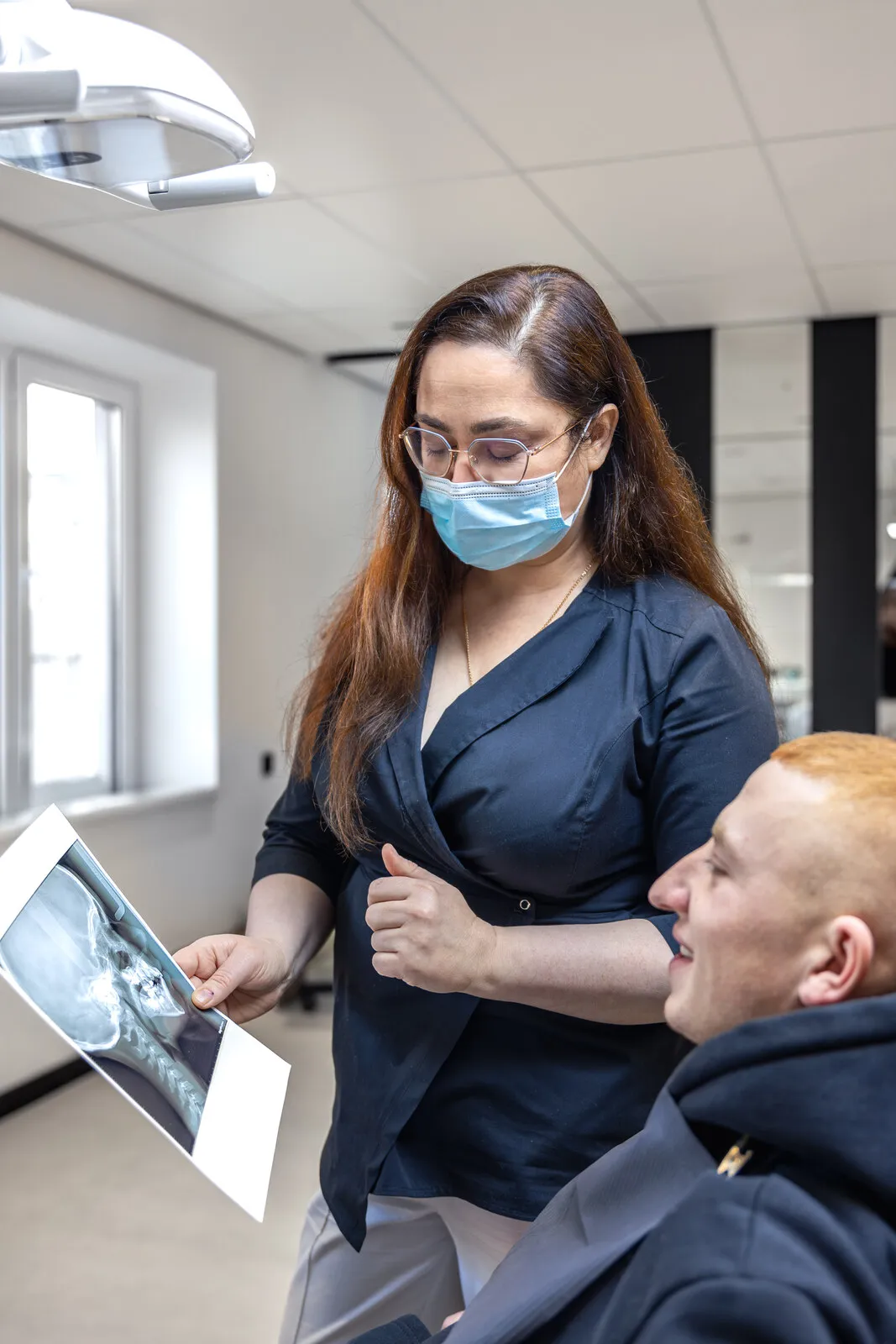
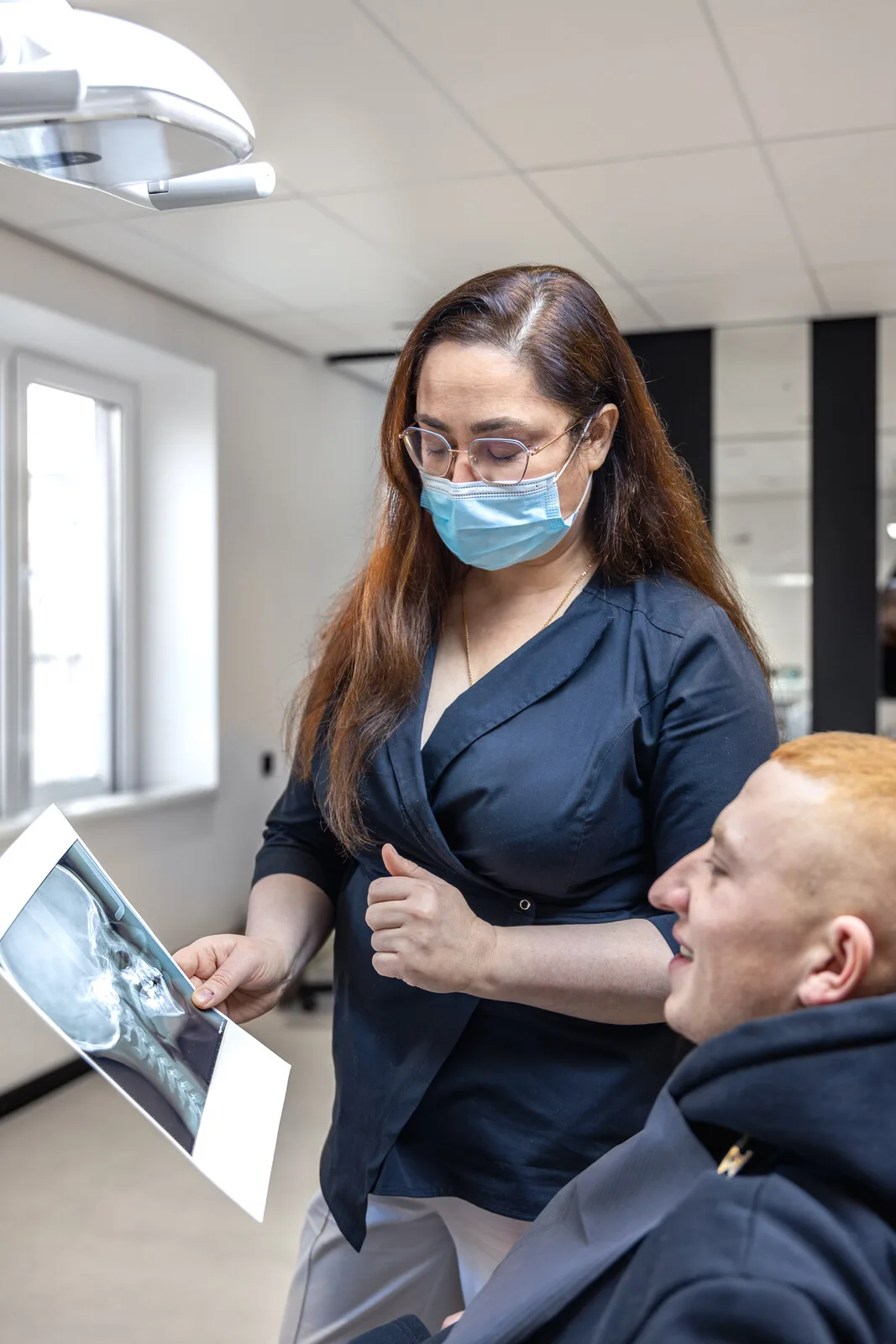
A Dentaláser clinician showing a TMJ X-ray to a patient
Home Bruxism & TMJ

Bruxism and TMJ: your jaw needs
to rest too. Bruxism and TMJ in Fuengirola and Maqueda

Diagnosis and a custom-made night guard.

Bruxism is clenching or grinding your teeth, either consciously during the day or unconsciously while you sleep. It overloads the temporomandibular joint and can cause jaw pain, headaches and tooth wear. At Dentaláser we diagnose your case and make a custom night guard, fitted by your dentist.

Custom night guard
Diagnosed and fitted
by your dentist
A Dentaláser dentist showing an X-ray to a patient to assess the temporomandibular joint
TMJ
Temporomandibular joint: it connects the jaw to the skull
WHAT BRUXISM IS

Clenching or grinding
your teeth without realising it.

Bruxism is clenching or grinding the teeth involuntarily. It can happen while you're awake, almost always without you noticing, or during sleep, in which case it is considered a sleep-related movement disorder. Either way, the repeated force on the teeth and jaw can wear down the enamel and overload the temporomandibular joint (TMJ), the hinge that connects your jaw to your skull and that you use to speak, chew and yawn.

Awake bruxism
Clenching the teeth during the day, usually without being aware of it (Mayo Clinic)
Sleep bruxism
Grinding or clenching while you sleep; associated with other sleep disorders such as snoring or apnoea (Mayo Clinic)
🦴
Bruxism can end up affecting the TMJ Sustained over time, the strain on the joint can lead to a temporomandibular disorder: pain, clicking or difficulty opening the mouth normally, as the NHS describes.
WARNING SIGNS

How to tell whether
you have bruxism.

Many people with bruxism don't know it until the consequences show up in their teeth or jaw. These are the most common signs described by the NHS and the Mayo Clinic.

🦷

Wear, fractures or tooth sensitivity

Teeth flatten, chip or hurt with cold or heat because of the gradual loss of enamel.

😖

Pain or tightness on waking

Your jaw feels tired, stiff or sore as soon as you get up, especially with sleep bruxism.

Jaw clicking or locking

Noises when opening or closing your mouth, or difficulty opening it normally: signs that the TMJ is involved.

🤕

Frequent headaches

Headaches, particularly at the temples, from muscle tension built up overnight.

👂

Ear or facial pain

Strain on the chewing muscles can radiate towards the ear and the side of the face.

😴

Unrefreshing sleep

You rest badly even when you sleep enough hours: sleep bruxism disrupts the quality of your sleep.

Sources: NHS · Mayo Clinic.

HOW WE DO IT

Before the night guard,
a diagnosis.

We don't make a night guard without examining your case first. Bruxism and TMJ problems have different causes and degrees, and the treatment is adapted to what we find at the appointment.

01
Examination of the jaw and the TMJ

We assess how far the mouth opens, whether there is clicking or locking, and tenderness on palpation of the muscles and the joint.

02
Review of wear and bite

We analyse how your teeth meet when you bite and the degree of wear, fracture or sensitivity the bruxism has caused.

03
An X-ray if needed

If the case calls for it, we complete the assessment with a radiographic image before deciding on the most suitable treatment.

TREATMENT

The night guard,
made for your mouth.

The night guard (also called an occlusal splint) is a device worn over the teeth, usually at night. It acts as a barrier between the upper and lower arches: it protects the enamel from direct rubbing and helps spread the force of the bite across the jaw. In cases of awake bruxism, it may also be prescribed for part of the day.

⚠️
Why buying an off-the-shelf guard is a bad idea The Spanish General Council of Dentists warns that an incorrectly designed or fitted guard can cause serious problems, such as a dislocation of the articular disc that limits how far the mouth opens, or injury to the soft tissues. A guard always causes changes in the temporomandibular joint and needs an extremely precise fit: it must be custom-made and adjusted by a dentist after examining your case, not bought off the shelf online or at the chemist.
What the scientific evidence says. A Cochrane Collaboration review of occlusal splints for sleep bruxism concludes that there is not enough evidence that they reduce the clenching or grinding habit itself, although it does point to a possible benefit in protecting against tooth wear. The guard is not a miracle cure: it is a protective tool within a broader approach that in many cases also involves managing the stress or sleep habits behind it.

Types of night guard

Soft guard or hard guard?
It depends on your case.

Not every case of bruxism needs the same type of guard. At your appointment we assess how intense your bruxism is and the state of your bite in order to recommend the right one.

Feature Soft guard Hard guard (Michigan type)
Who it's for Mild or occasional bruxism Moderate or severe bruxism, long-term use
Material Silicone or soft resin Rigid acrylic resin
Getting used to it More comfortable at first Needs a more precise fit
Durability Wears out sooner with severe bruxism More hard-wearing; regular fit reviews
HOW IT'S MADE

From examination to
your night guard.

Making a custom night guard follows a clinical process; it isn't an off-the-shelf mould. This is how we do it at Dentaláser.

1
Examination and digital record

We take a 3D intraoral scan or a physical impression of your mouth, along with a record of how you bite.

2
Custom design and manufacture

With that data, a guard is designed and made to fit your dental arch, in the material best suited to your case.

3
Fitting and bite adjustment

We check that the guard seats properly and that the contact between the teeth is balanced, adjusting whatever is needed.

4
Use and regular reviews

You start wearing it, mainly at night, and we check its fit and wear at your following visits.
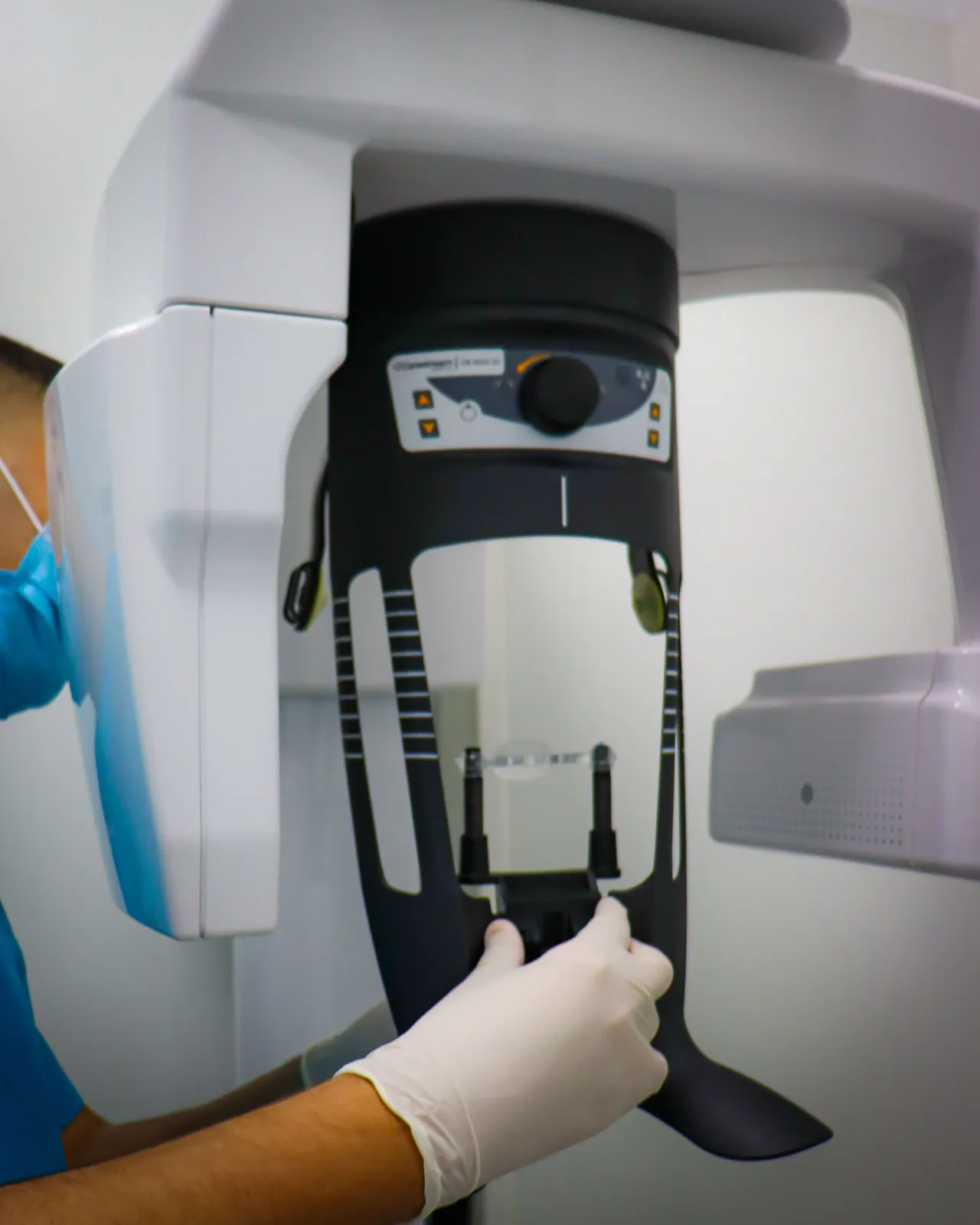
The 3D intraoral scanner used at Dentaláser for the digital record of the night guard
3D scan
A digital record,
with no impression paste
DENTALÁSER IN NUMBERS

Over 30 years at
your service.

1987
Year
founded
4.9
In our patient
reviews on Google
2
Clinics: Fuengirola
and Maqueda
1st visit
Free, and includes an
examination of your jaw
FREQUENTLY ASKED QUESTIONS

What people ask
us most.

Dentaláser clinical team · Clinical director: Dr Alberto Cerezo · Last updated: 2 September 2026

If you have more questions, call us on 952 46 67 33 or book an appointment. The first visit is completely free and with no obligation whatsoever.

Sources: NHS · Mayo Clinic · Spanish General Council of Dentists · Cochrane Collaboration

There is no definitive cure that removes bruxism, but it can be managed. The night guard protects the teeth from the wear caused by clenching or grinding, while tackling the underlying cause — usually stress, anxiety or sleep disorders — helps reduce the habit. A Cochrane review of occlusal splints notes that the evidence on whether they reduce bruxism itself is limited, although there may be a benefit in protecting against tooth wear.
The Spanish General Council of Dentists warns that an incorrectly designed or fitted guard can cause serious problems, such as a dislocation of the articular disc that limits how far the mouth opens, or injury to the soft tissues. A guard always causes changes in the temporomandibular joint and needs an extremely precise fit, so it must be made and adjusted by a dentist after an individual examination, not bought off the shelf.
The night guard is worn mainly at night, while you sleep, although in cases of awake bruxism it may also be prescribed for part of the day. How long it is worn and how often it is checked depend on each case: at Dentaláser we assess the wear and fit of the guard at every review, so the treatment follows how your bruxism develops.
Awake bruxism means clenching or grinding the teeth during the day, almost always without noticing, at moments of concentration or tension. Sleep bruxism happens while you sleep and is considered a sleep-related movement disorder: according to the Mayo Clinic, those who have it are more likely to experience other associated disorders, such as snoring or sleep apnoea.
Bruxism overloads the muscles of the jaw and temples; the NHS and the Mayo Clinic list headaches among its most common symptoms. More detail in Bruxism and headaches: the hidden connection
Diagnosis starts with a clinical examination: we check tooth wear, the facial muscles, how far the mouth opens and the state of the temporomandibular joint (clicking, tenderness on palpation, locking). If necessary, we complete the assessment with an X-ray. With that information we judge whether you need a night guard and which type suits your case best.
It's normal for the guard to feel like a foreign object for the first few days, as with any appliance worn in the mouth. If it still bothers you after the settling-in period, hurts, or your bite feels unstable, come back so we can readjust it: a properly fitted guard should not cause pain.
FIRST VISIT · COMPLETELY FREE

Your first visit to Dentaláser
is completely free.

We examine your jaw and your bite, assess whether there is bruxism or a TMJ problem, and tell you exactly what you need. No waiting lists. No obligation. Call us: 952 46 67 33.

Free first visit
30+ years of experience
Custom-made, not off the shelf
Fuengirola and Maqueda
BRUXISM AND TMJ IN FUENGIROLA

Bruxism and TMJ diagnosis in
Fuengirola and Maqueda

Dental clinic in Fuengirola, Avda. Mijas 23. Diagnosis of bruxism and temporomandibular joint disorders, with a night guard made and fitted to measure. We also see patients from Mijas, Benalmádena and Torremolinos. First visit free.

01
Bruxism and TMJ diagnosis

Clinical examination of the jaw, the muscles and the temporomandibular joint. Included in your free first visit in Fuengirola.

02
Custom-made night guard

Made and fitted by your dentist, never off the shelf. Designed for your bite and the degree of your bruxism.

03
Follow-up and adjustment

We check the wear on the guard and how your bruxism is developing at every visit, adapting the treatment if needed.

QUESTIONS ABOUT BRUXISM AND TMJ IN FUENGIROLA
At Dentaláser Fuengirola we diagnose bruxism and temporomandibular joint disorders and make your night guard to measure. We also see patients from Mijas, Benalmádena and Torremolinos. The first visit is completely free.
The Spanish General Council of Dentists warns that a poorly designed or poorly fitted guard can cause serious problems in the temporomandibular joint, including limiting how far the mouth opens. It needs to be custom-made and fitted by a dentist after examining your case.
Yes. The first visit at Dentaláser Fuengirola is free and includes an examination of the jaw and the temporomandibular joint. If we find signs of bruxism, we explain the treatment options with no obligation.
Call WhatsApp