
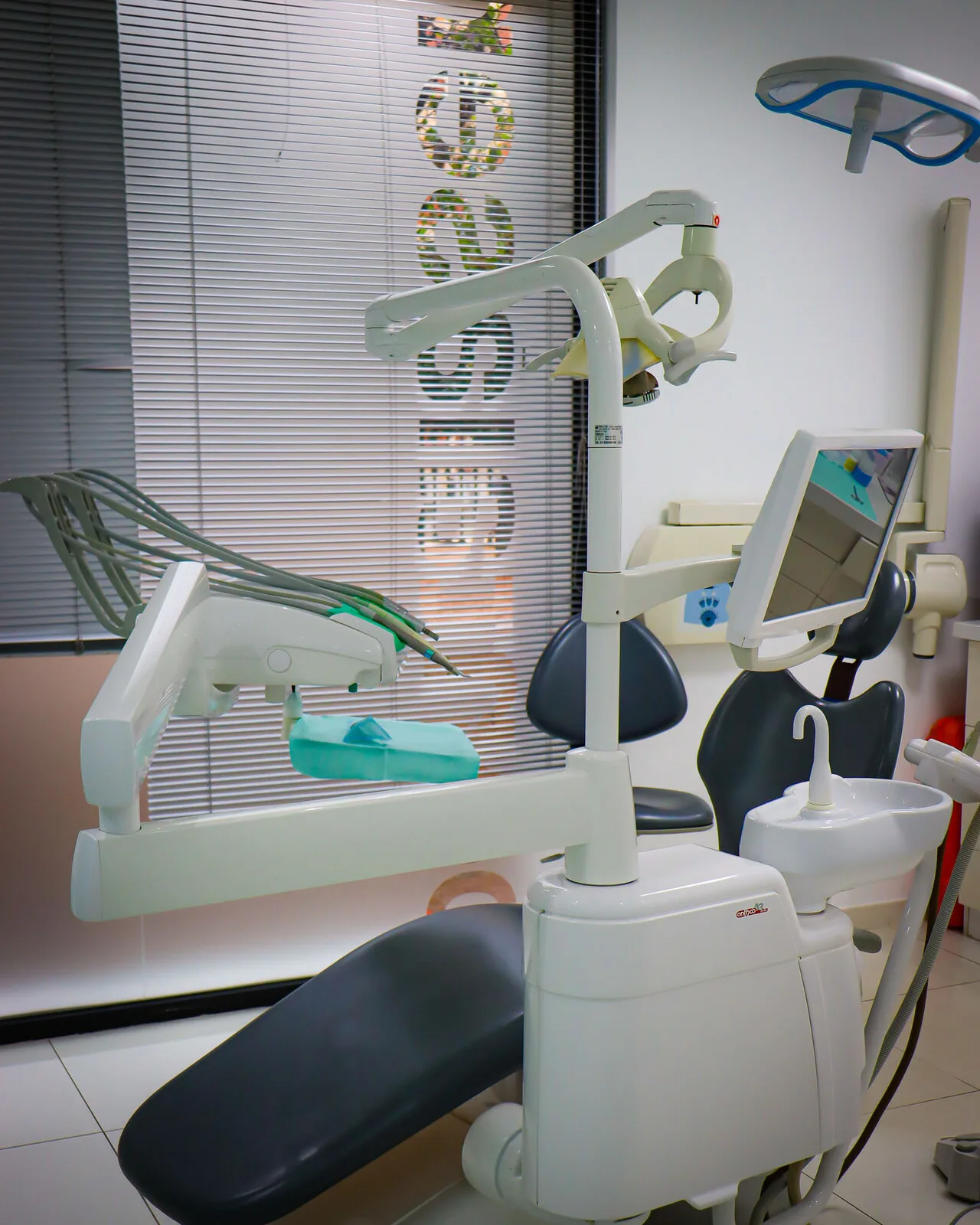
When a tooth needs something more. Oral surgery in Fuengirola and Maqueda
Wisdom teeth, cysts and frenula, with local anaesthesia.
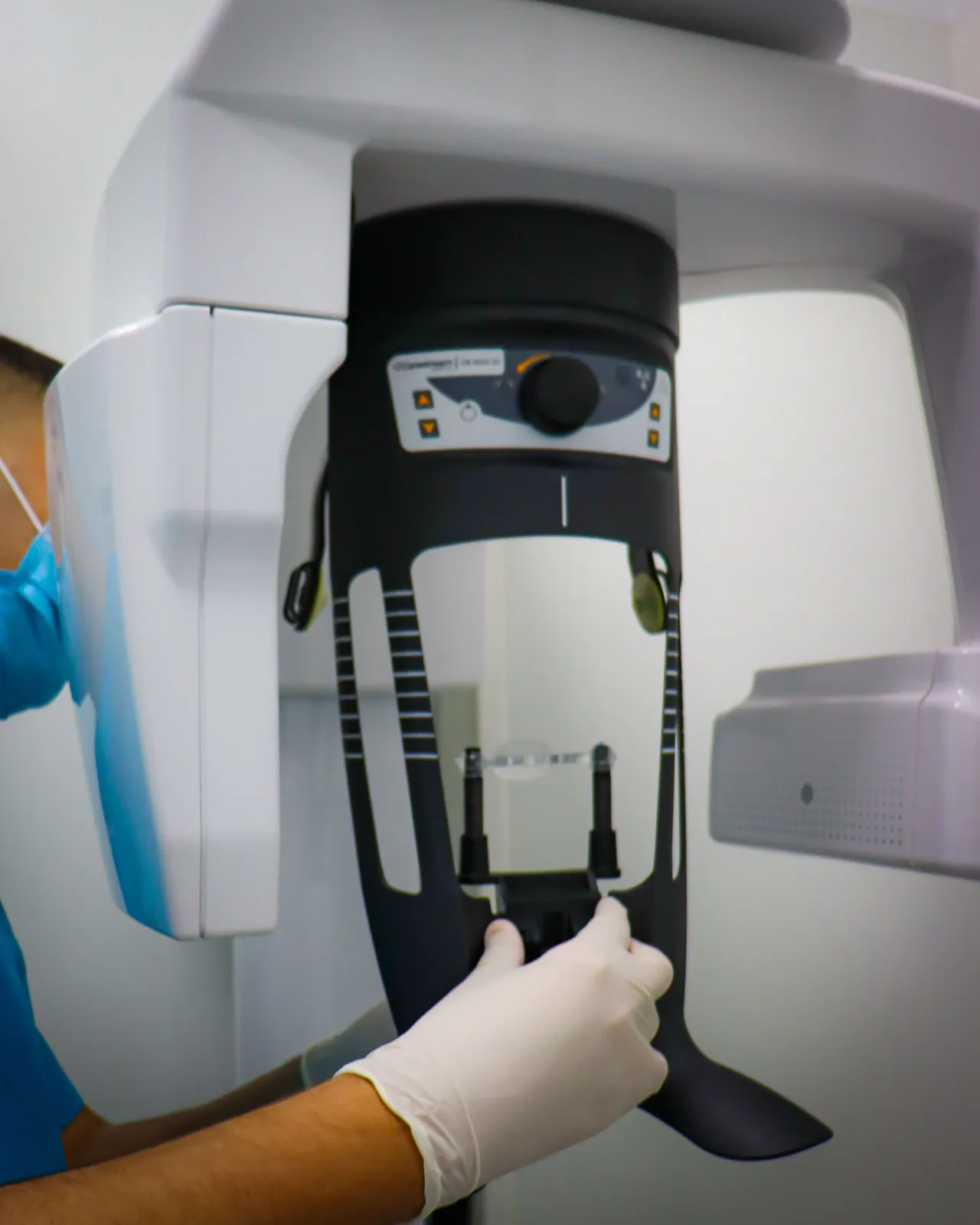
Oral surgery solves what conventional dental treatment can’t: impacted or problematic wisdom teeth, dental cysts and frenula that limit speech, eating or tooth position. We diagnose with a panoramic X-ray or CBCT scan and operate under local anaesthesia, supporting you through every day of recovery.
Three situations.
Just one speciality.
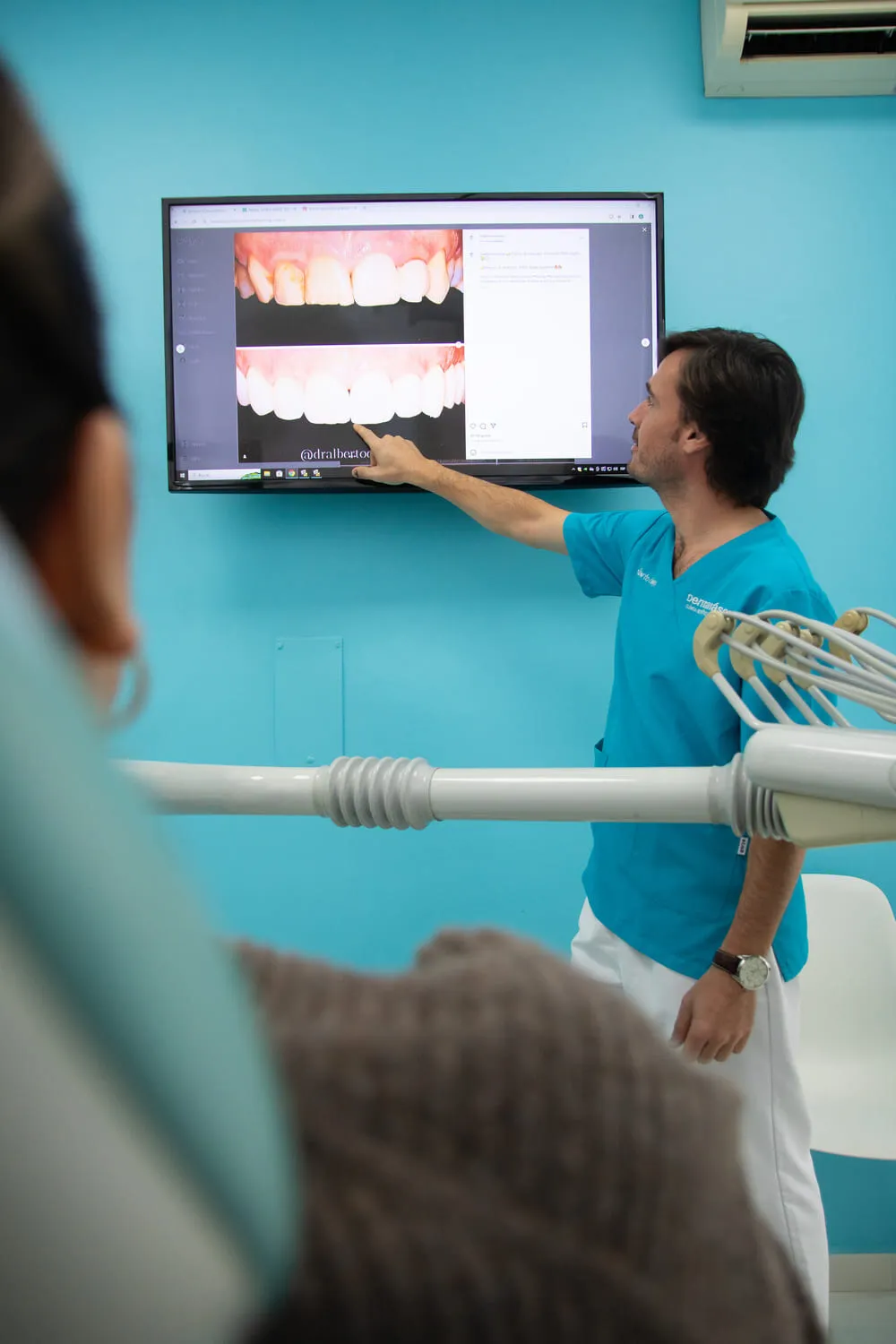
Oral surgery treats what falls outside routine dental treatment: teeth, bone or soft tissue that need a minor surgical procedure inside the mouth. At Dentaláser it mainly covers three situations: wisdom teeth with no room to erupt or that are causing problems, cysts that form in the jaw bone, and frenula (lip or tongue) that limit speech, eating or tooth position.
The signs that show
it needs to be extracted.
Wisdom teeth (third molars) usually appear between the ages of 17 and 25. Not all of them cause problems, but these are the situations that most often lead to a recommendation for extraction.
Impaction:
no room to erupt
When the jaw doesn’t have enough space, the tooth stays fully or partly covered by bone or gum. It can remain like this with no symptoms, or press against the second molar and cause pain, crowding or damage to the neighbouring tooth.
Pericoronitis
When the tooth erupts only partway, the gum that partly covers it traps food debris and bacteria and becomes inflamed again and again, with pain, swelling and sometimes a bad taste in the mouth. If it keeps recurring, extraction stops it happening again.
Risk to the second molar
A tilted wisdom tooth can push against the tooth next to it, encouraging decay in a spot that’s hard to clean or resorption of its root. Extracting it in time protects the neighbouring tooth.
Cyst associated with the tooth
An impacted tooth can develop a cyst around its crown with no symptoms at all. It’s picked up on a routine X-ray and is, on its own, a reason to consider extraction.
No symptoms doesn’t always mean it has to come out
A Cochrane review found insufficient evidence to decide whether an impacted, symptom-free wisdom tooth that is free of disease should be removed as a preventive measure. We assess it case by case with X-rays.
Precise diagnosis.
Surgery without surprises.
The better we know the exact position of the tooth, cyst or frenulum before operating, the simpler, safer and more predictable the procedure is. That’s how we do it at Dentaláser.
We pinpoint the position of the root, cyst or frenulum and its relationship to nearby structures, such as the inferior alveolar nerve in lower wisdom teeth.
The procedure is carried out under local anaesthesia. For patients with high dental anxiety, we also offer conscious sedation.
The position and angle of the tooth, the depth of the cyst or the type of frenulum determine the exact technique we apply, with no generic protocols.
We close the wound with sutures when needed and give you clear aftercare instructions and a follow-up review.
Five steps, from
the X-ray to the review.
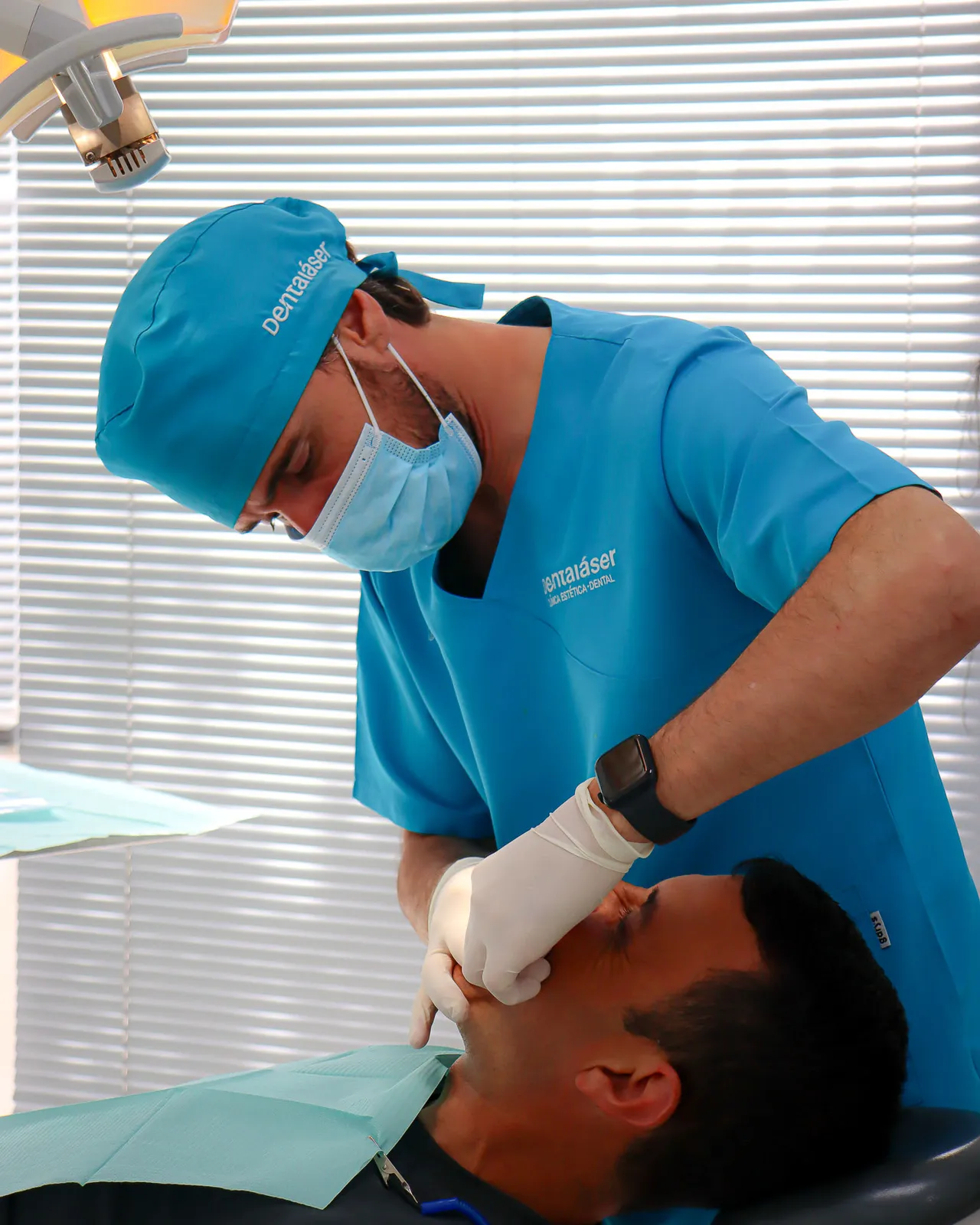
This is how a surgical wisdom tooth extraction unfolds at Dentaláser, from start to finish.
We assess the exact position of the tooth with a panoramic X-ray or, if more detail is needed, with a CBCT scan.
We fully numb the area before starting. If there’s a lot of anxiety, we consider conscious sedation.
We access the tooth according to its position and extract it, sectioning it into fragments if needed to minimise trauma to the bone.
We clean the area and close it with sutures when the case requires it, to encourage orderly healing.
We explain the care needed in the first few days and arrange a review to check that healing is going well.
What you can
expect after surgery.
Sources: NHS — Wisdom tooth removal, recovery · Mayo Clinic — Wisdom tooth extraction
When bone
hides something more.
A dental cyst is a tissue-lined cavity, usually containing fluid, that forms in the jaw bone. The great majority cause no pain at all: they are almost always discovered by chance, on a routine X-ray.
When the frenulum
limits movement.
Frenula are small folds of tissue that connect the lip or tongue to the gum or the floor of the mouth. Most cause no problem at all, but when they are attached too low or are too short, they can interfere with speech, eating or tooth position.
The frenulum under the tongue is shortened and limits its movement. According to the NHS, it is estimated to affect around 1 in 10 newborns, although it can also be diagnosed later, when it makes feeding difficult in babies, affects the pronunciation of certain sounds in children, or affects hygiene and speech in adults. It is corrected with a lingual frenectomy or frenotomy.
The frenulum between the upper lip and the gum, when attached too low, can keep a gap between the central incisors (diastema) or encourage gum recession. It is assessed alongside orthodontic treatment when that gap needs to be closed for good.
Risks and alternatives
What you need to know
before surgery.
As with any surgery, wisdom tooth extraction carries known and well-documented risks. We explain them before operating, with no surprises.
| Risk | How we manage it |
|---|---|
| Swelling and bruising | Common in the first few days. Eases with local cold compresses and the prescribed medication. |
| Dry socket (loss of the blood clot) | Prevented by avoiding vigorous rinsing, spitting or using a straw on the first day. |
| Temporary sensitivity or numbness | More common in lower wisdom teeth close to the inferior alveolar nerve. That’s why we consider CBCT before operating in these cases. |
| Postoperative infection | Uncommon if the aftercare instructions are followed. We give you clear instructions and a follow-up review. |
When a wisdom tooth has no symptoms and is free of disease, the alternative to extraction is monitoring: periodic check-ups with X-rays to confirm no complications appear, rather than operating as a preventive measure. It’s the decision made together with the patient when there’s no clear indication, based on the available evidence (Cochrane).
What we get
asked most.
Dentaláser clinical team · Clinical direction: Dr Alberto Cerezo · Last updated: September 2026
If you have more questions or are in active pain, call us on 952 46 67 33. The first visit is completely free, with no obligation.
Is a wisdom tooth bothering you?
Don’t wait for it to get worse.
We examine you, assess with X-rays and explain exactly what you need. No waiting lists for acute pain. Call us: 952 46 67 33.
Oral surgery in
Fuengirola and Maqueda
Dental clinic in Fuengirola, Avda. Mijas 23. Extraction of wisdom teeth, removal of dental cysts and frenectomies, with diagnosis by panoramic X-ray or CBCT. We see patients from Fuengirola, Mijas, Benalmádena and Torremolinos, and also at our Maqueda clinic (Campanillas). Free first visit, no waiting lists for acute pain.
Panoramic X-ray or CBCT scan to know the exact position before any surgery.
With local anaesthesia the procedure doesn’t hurt. For cases of high anxiety, we offer conscious sedation.
If you have active pain from a wisdom tooth, we prioritise your appointment in Fuengirola or Maqueda.
Find out more
Keep reading
Look after your whole oral health