
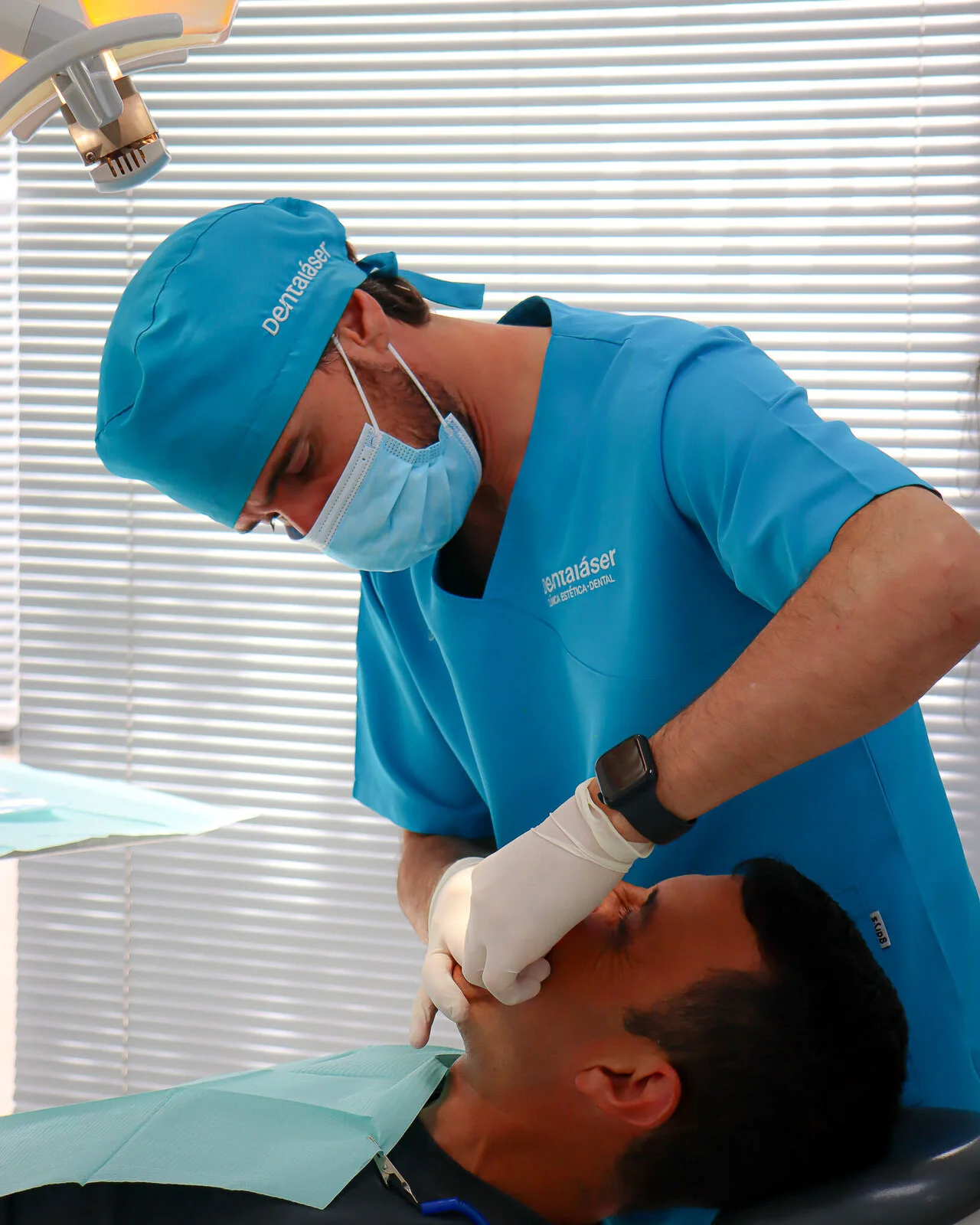
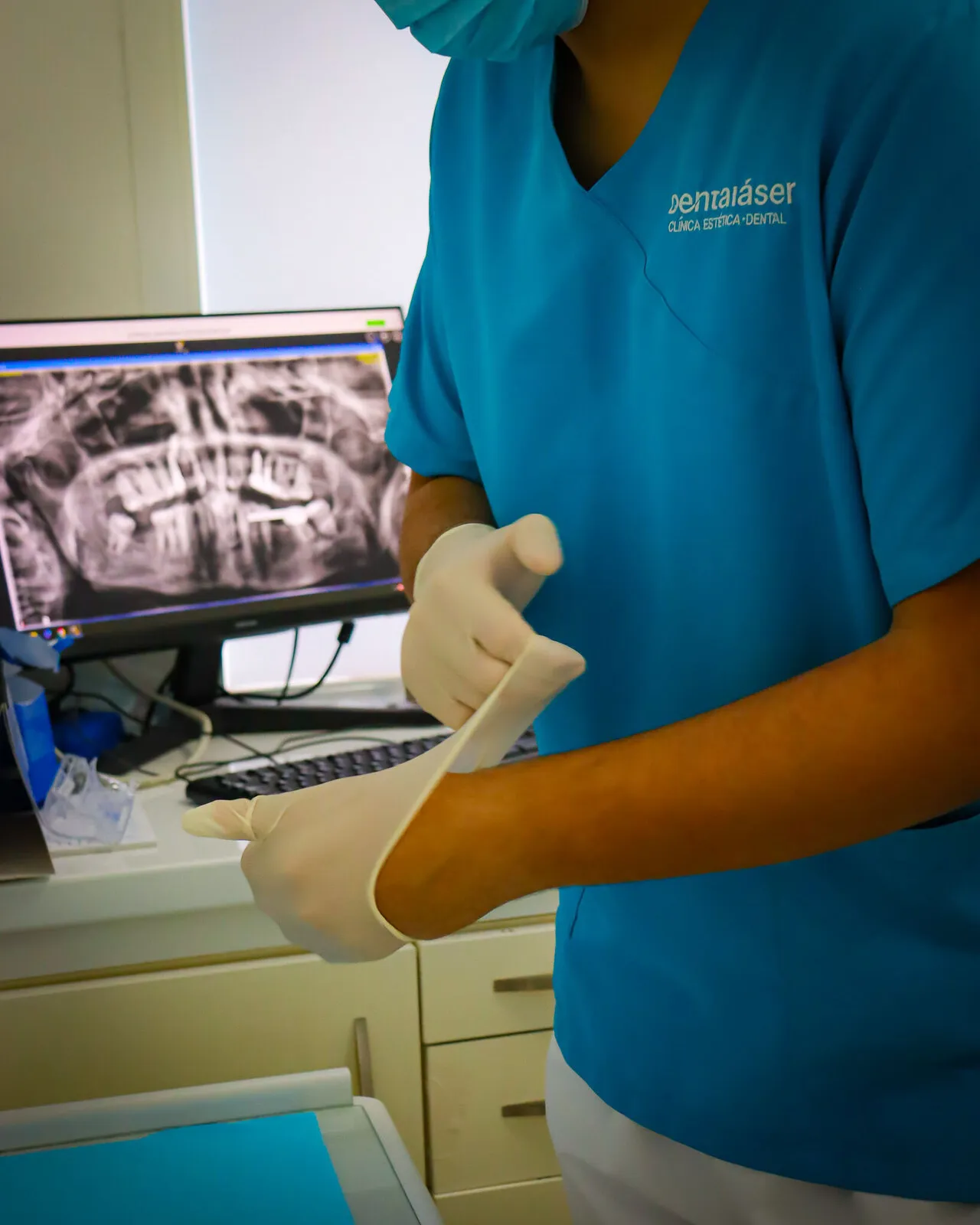
What they have in common: a full fixed prosthesis on implants in a day
All-on-4 and All-on-6 are two variants of the same idea: replacing a full arch of missing or badly damaged teeth with a fixed prosthesis, supported on a small number of implants and loaded on the same day as surgery through immediate loading. Neither technique requires one implant per missing tooth, which is what made this solution unviable with older techniques in patients with little bone.
Both techniques are the basis of what we call "teeth in 24 hours" at Dentaláser: you leave the clinic the same day with a fixed provisional prosthesis, with no removable false gums, while the bone completes osseointegration over the following months.
The real difference: number of anchors and load distribution
The difference between the two isn't about "quality" but about engineering: All-on-4 distributes the whole prosthesis across 4 implants, two of which are usually tilted to make better use of the available bone at the back of the jaw. All-on-6 adds two more anchors, spreading the same chewing load across more support points.
More implants doesn't automatically mean "better": it means a different distribution of forces, which may be preferable in some cases and bring no meaningful advantage in others.
When All-on-4 pays off
All-on-4 tends to be considered when the available bone volume is limited, especially at the back of the upper jaw, where there isn't always room to place more anchors without resorting to grafts or prior bone regeneration. Using fewer implants also makes it an option with a lower treatment cost, without giving up a good-quality fixed prosthesis.
When All-on-6 pays off
All-on-6 is considered for arches with greater functional demands: patients with bruxism, very strong bites, or cases where a wider long-term safety margin is wanted. By spreading the load across more implants, each individual anchor bears less force, which can translate into less wear on each one over the years.
What really influences the decision
| Feature | All-on-4 | All-on-6 |
|---|---|---|
| Number of implants | 4 | 6 |
| Bone volume required | Lower, suits more limited cases | Higher, or case-specific planning |
| Load distribution | Across 4 anchor points | Across 6 anchor points |
| Typical indication | Lower bone volume, tighter cost | Arches with greater functional demands |
| Treatment cost | Generally lower | Generally higher, due to more implants |
The amount of bone available after the 3D scan, the state of the bite, bruxism and each patient's expectations weigh more heavily on the final decision than a generic preference for "more implants". That's why the recommendation is made after an individual assessment with a CT scan, never applied as a standard rule for every case.
- Any panoramic X-ray or previous scan you already have
- Information about whether you have bruxism or a very strong bite
- Your guide budget, if you've already been given a price range
- Specific questions about which of the two techniques suits your case
The choice between All-on-4 and All-on-6 is confirmed with a 3D CT scan at your first visit, not before.