
What you feel during surgery
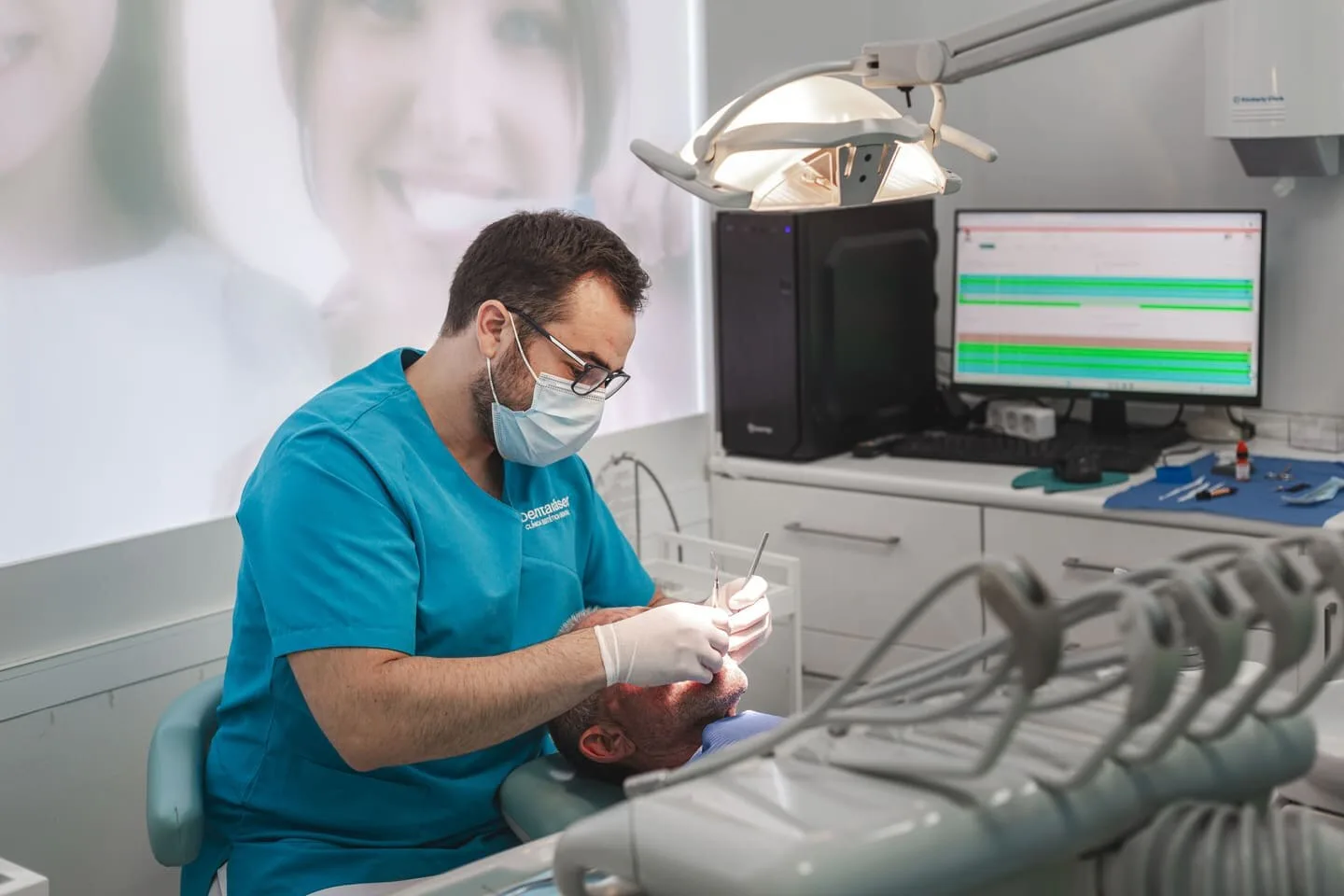
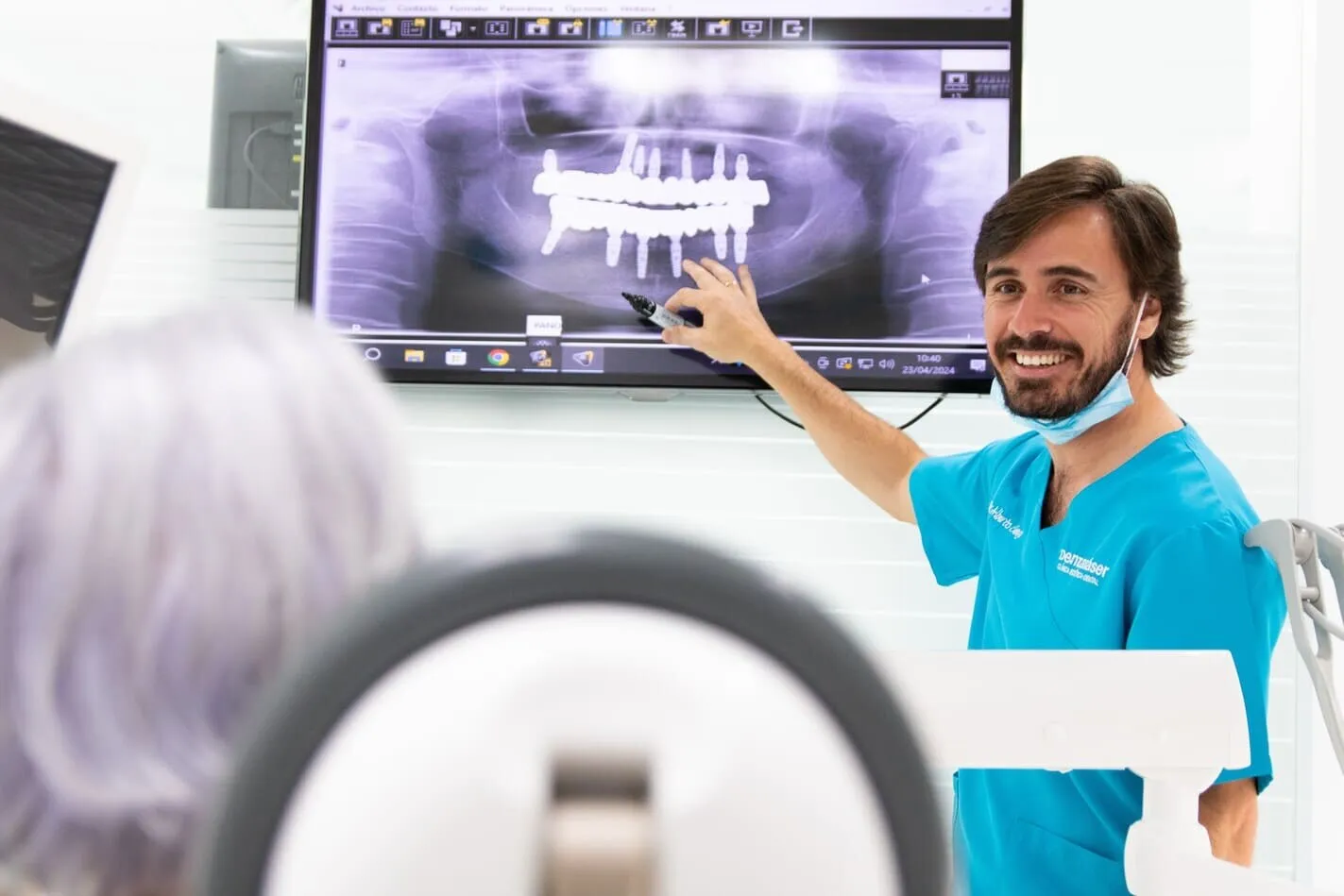
Surgery is carried out under deep local anaesthetic: the area is completely numbed and, although you may notice pressure, vibration or the noise of the instruments, there is no pain. The sensation is comparable to that of any filling. The procedure takes between 30 and 60 minutes per implant, and at Dentaláser it's planned with a prior 3D scan, which allows for minimally invasive, highly precise surgery.
If you have high dental anxiety, intravenous conscious sedation is an option: it lets you stay relaxed throughout the procedure while breathing independently, with no need to go to a hospital or an outside operating theatre. In many cases, a temporary crown is also fitted on the same day as the surgery.
The first 24-48 hours: what's normal to feel
When the anaesthetic wears off, usually a few hours after leaving the clinic, it's common to notice mild to moderate discomfort in the area, gradual swelling and some slight bleeding. According to Guy's and St Thomas' NHS Foundation Trust, the most effective approach is to take the first painkiller before the anaesthetic has fully worn off and to keep to the schedule for the first 48 hours, rather than waiting for the pain to appear.
For most patients, the most intense discomfort is concentrated in those first 48-72 hours and eases noticeably towards the end of the first week. Most people return to their normal activities the day after the procedure.
How to ease the discomfort at home
- Prescribed painkiller: take it as instructed by the dentist, without waiting for the pain to appear.
- Local cold for the first few hours to reduce swelling (cold compresses outside the mouth, never ice directly on the skin).
- A soft, lukewarm diet on the first day: avoid very hot, hard or crunchy food.
- Relative rest for the first 48-72 hours: avoid intense physical exercise, which can increase swelling and bleeding.
- Don't smoke: tobacco delays healing and is the main risk factor that can compromise osseointegration.
Why recovery isn't the same for everyone
The amount of discomfort varies from person to person and also depending on the case: a single implant is not the same as several in the same session, nor is a straightforward placement the same as one that includes prior bone regeneration. The more implants and the more complex the surgery, the more likely it is that swelling and discomfort will be somewhat greater in the first few days, although pain management follows the same guidelines.
Tobacco is, once again, the individual factor with the biggest influence: it delays soft-tissue healing and can prolong both the discomfort and the osseointegration process itself. So if you smoke, cutting down or avoiding it in the days before and after surgery helps your recovery be closer to what most patients describe.
- The pain increases instead of easing after 72 hours
- A fever appears
- Swelling keeps growing instead of going down by the third day
- Heavy bleeding that doesn't stop with gauze and gentle pressure
- A persistent bad taste or discharge in the area
None of these symptoms is part of a normal recovery. If any of them appear, call the clinic rather than waiting for your next check-up.