
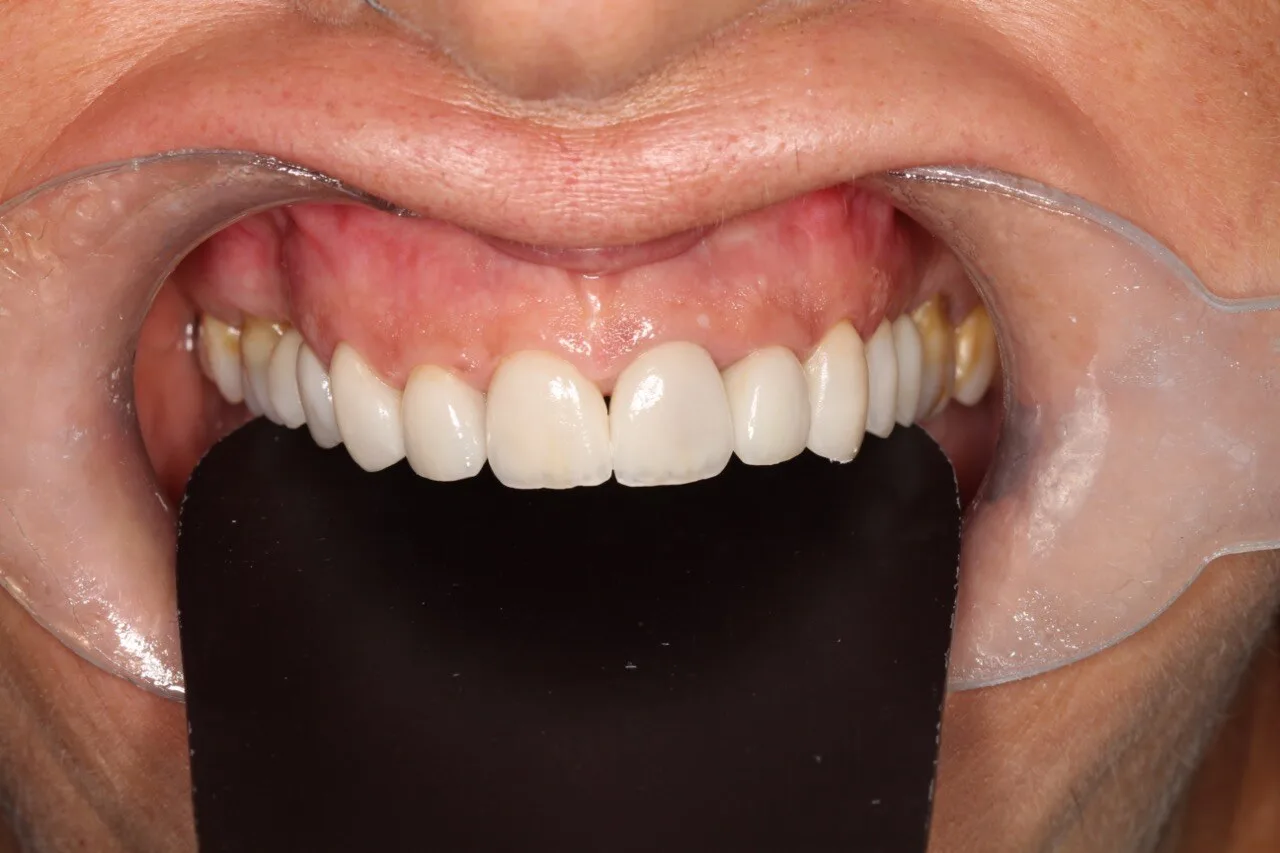
Composite or porcelain veneers: the real differences
Composite and porcelain solve the same problem (improving the shape or colour of your teeth) but behave very differently over the medium term. The difference isn't just cosmetic: it lies in the process, the durability and the maintenance each material requires.
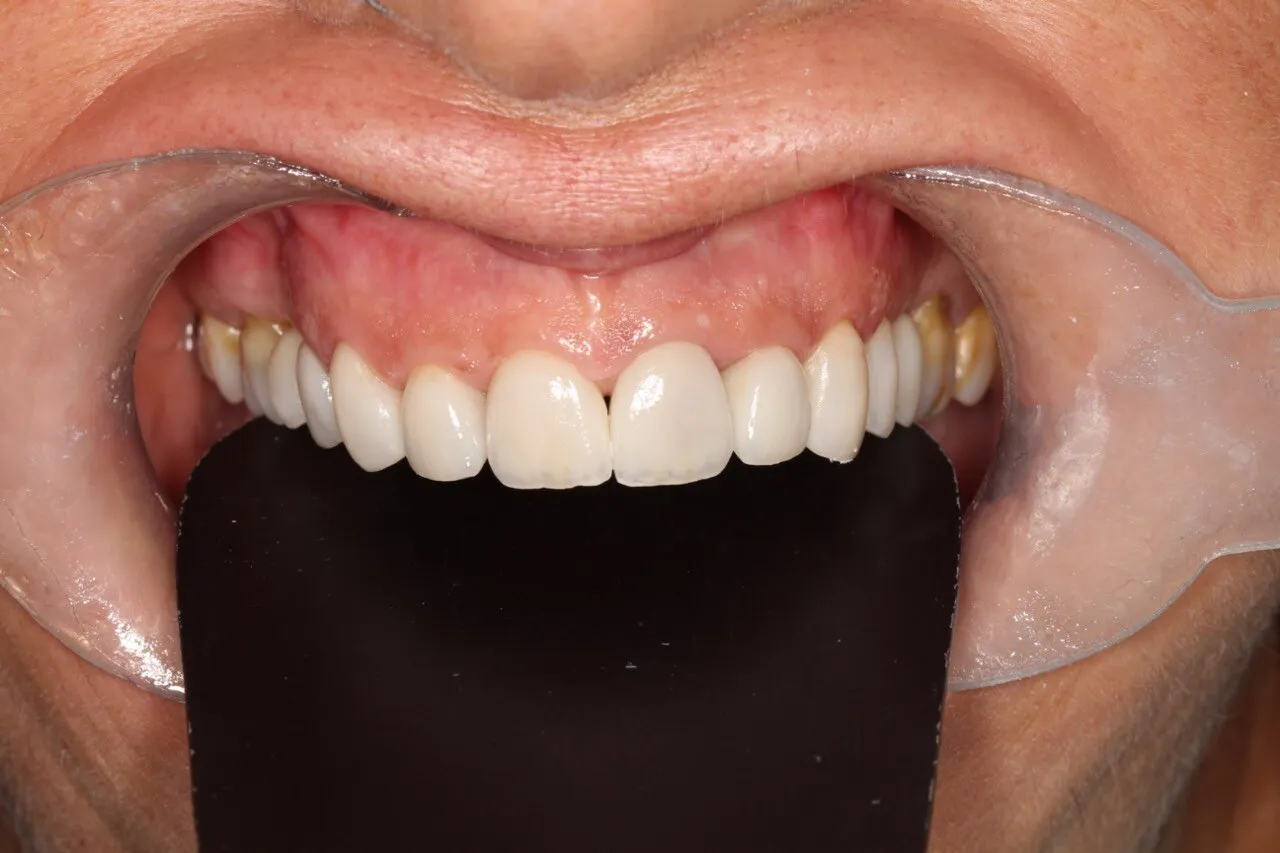
What a composite veneer is
A composite veneer is tooth-coloured dental resin that the dentist applies and sculpts directly onto the surface, layer by layer, in the same appointment. It doesn't need a lab or a second visit to fit: it's applied, polished, and you leave with the result the same day. It's the most affordable and most reversible option, though also the one that holds up least well over time against staining, wear and small chips.
What a porcelain veneer is
A porcelain veneer is a ceramic shell made in a dental laboratory from a very precise mould of the tooth, after a very thin layer of enamel has been shaved off beforehand. It requires at least two visits: one to prepare the tooth and take measurements, and another to bond the finished veneer in place. In exchange, it offers a finish that is more resistant to staining and wear over the years.
Comparison
| Feature | Composite | Porcelain |
|---|---|---|
| Process | Direct, sculpted in the mouth | In a laboratory, from a mould |
| No. of visits | 1 | 2 or more |
| Tooth wear | Minimal, low-invasive technique | Requires shaving off a thin layer of enamel |
| Stain resistance | Lower, may need touch-ups | Higher, more stable over time |
| Reversibility | High | Low, the shaved enamel doesn't regenerate |
| Cost per tooth | The most affordable option | Higher initial investment |
The exact price depends on the number of veneers, the starting condition of the tooth and the result you're after: there is no fixed price per material without assessing your case. At Dentaláser, the first cosmetic dentistry consultation is free and includes a detailed quote.
Which to choose for your case
- A quick touch-up on one or two teeth, a tight budget or a reversible solution: composite tends to be the better fit.
- Several veneers on visible teeth, intended as a long-term investment: porcelain tends to be the more stable option over the years.
- You want to try out the change before committing: composite lets you assess the result with less risk, since it doesn't involve shaving the tooth.
Frequently asked questions
- This article is for information purposes only and does not replace assessment by a healthcare professional. Always consult your dentist.
Composite or porcelain? Find out for free with us.
We'll analyse your teeth and your aesthetic goals and tell you which material best suits your case, at no cost and with no obligation.
Keep reading